
Last updated
How Do Porta Potties Work?
The basic unit is a booth over a holding tank, about 44 by 48 inches on the ground and roughly 92 inches tall. Nothing about it connects to a sewer line or a water main. Waste drops into the tank below the seat, where a chemical treatment (the same blue liquid you have probably seen through the vent) suppresses odor and starts breaking down solids. There's a vent stack up top that lets gas escape instead of building up inside the booth. When Canton Porta Pros arrives for service, a technician vacuums the tank out through a valve, rinses it, and re-doses the chemical before closing it back up. ANSI/PSAI Z4.3, the industry standard for portable sanitation, sets a baseline of one service visit per week for up to 10 users across a 40-hour week, though busy construction sites or events need more frequent stops. If you're trying to work out how many units and how often, our porta potty rental checklist walks through it, and how many porta potties do I need breaks down the math by headcount.
How Do Flushable Porta Potties Work?
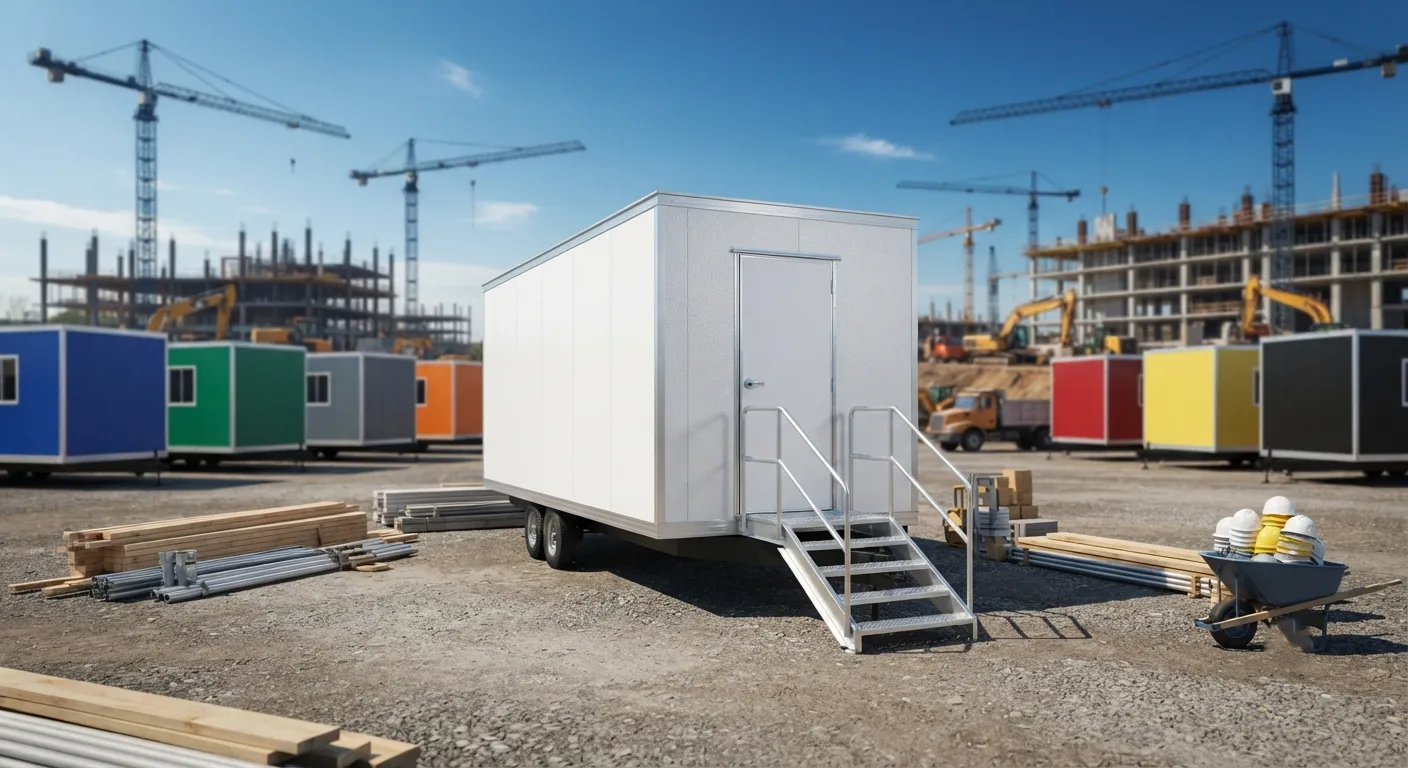
A deluxe flushable unit uses a small onboard freshwater tank and a hand pump or foot pump to push a measured rinse through the bowl after each use, instead of relying only on the holding tank below. That rinse cycle is what makes it feel closer to a bathroom at home. The wastewater still goes into the same kind of sealed holding tank as a standard unit, just with more liquid volume to manage, so these get serviced on a tighter rotation. Restroom trailers take this further: they run on a fresh water supply and a black water tank, with real plumbing fixtures inside. If you want something closer to indoor plumbing for a wedding or a multi-day event, look at our deluxe flushable porta potty page or step up to a restroom trailer rental with 2-stall, 4-stall or 8-stall layouts.
How Does a Portable Sink Work?
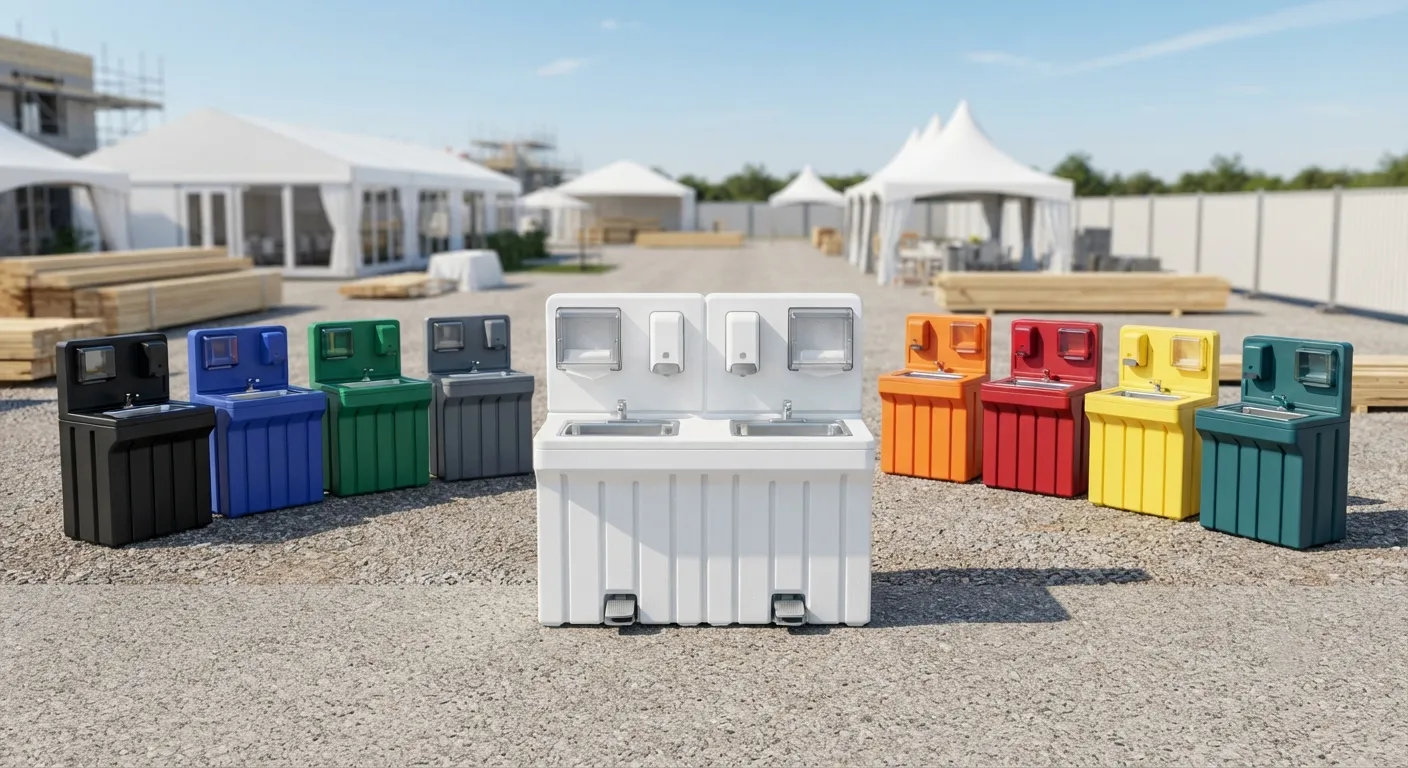
A portable handwashing station carries its own fresh water in a top tank, gravity-feeds it through a spigot or foot pump, and drains the used water into a holding tank underneath, no plumbing required. Soap dispensers mount on the side. Under 29 CFR 1910.141(d)(2), washing facilities need actual soap and towels or a hand-drying device; hand sanitizer alone doesn't satisfy that. That distinction matters most on job sites where workers are applying paints, coatings, herbicides or insecticides, because OSHA 1926.51(f)(1) specifically requires washing facilities in those contaminant situations, not just a sanitizer pump. Canton Porta Pros sets these up alongside porta potties on most construction sites and delivers them standalone for events too. See handwashing station rental for setup details, portable sink rental for the sink-only option, and handwashing requirements if you need to know what a specific job site is required to have.

Why Do Construction Sites Need Porta Potties?
OSHA 1926.51(c) sets the ratio: one toilet facility for 20 workers or fewer, then one toilet seat and one urinal per 40 workers as the crew grows past that, dropping to one per 50 once you're past 200 workers. A construction worker running to a porta potty at the far edge of a site isn't a design flaw, it's usually a placement problem, and OSHA 1926.51(a)(1) also requires an adequate supply of potable water at every job site regardless of headcount. Canton Porta Pros places units to cut down that walk, factoring in where the crew actually works, not just where a driveway makes delivery easy. For anyone quoting a Canton job, OSHA portable toilet requirements covers the ratio in more depth and our construction site services page bundles toilets with fencing and dumpsters. Placement rules and clearance also matter for delivery: a roll-off dumpster needs about 60 feet of straight clearance behind the truck, and our porta potty placement guide covers similar clearance needs for toilet drop-off.
Camping porta potties work the same way as job-site units mechanically, just usually a standard unit dropped at a campground or private lot with a lighter service schedule since fewer people use it per day. For a septic system tied to a house rather than a rental unit, a residential tank typically needs pumping every 3 to 5 years depending on tank size and household size, and a grease interceptor gets pumped once fats, oils, grease and solids hit 25 percent of the liquid depth. Canton Porta Pros handles that side of things too through septic pumping service and grease trap pumping. None of that uses the same chemical treatment as a porta potty tank, so don't mix the two systems up when you're budgeting service calls.
Do porta potties smell if they're serviced correctly?
A well-serviced unit shouldn't smell strongly. The chemical treatment and vent stack are built to manage odor between pumps, and Canton Porta Pros services standard units on a schedule that keeps the tank well under capacity. See do porta potties smell for what affects odor between visits.
How often are porta potties cleaned on a job site?
It depends on crew size and usage, but ANSI/PSAI Z4.3 sets a weekly baseline for lighter use. High-traffic Canton sites often need two or more visits a week. Full detail is on how often are porta potties cleaned.
What chemicals go in a porta potty tank?
A blue deodorizing and digesting treatment goes into the tank to break down solids and control odor between services. Canton Porta Pros restocks it at every pump-out, so you never manage the chemical yourself.
Are portable toilets ADA accessible?
Standard units aren't wheelchair accessible on their own. ADA Standards 213.2 requires at least 5 percent of clustered units, and never fewer than one, to meet accessibility specs. Our ADA accessible porta potty page covers what that unit includes.
How much does a standard porta potty rental cost in Canton?
Pricing depends on rental length and unit type, with day, week and month rates all differing. See porta potty rental cost and monthly porta potty rental for the full breakdown.
Next step
Get a delivery date
Tell us the address, the dates and the headcount. We size the order and confirm the route.